
Cressi Origin Scuba Fins: Technical Diving Performance with 80 Years of Innovation

For 80 years, we have approached product development with the same principle: understand what people need in the water, then design equipment to meet that need.
The Cressi Origin is a continuation of that approach.
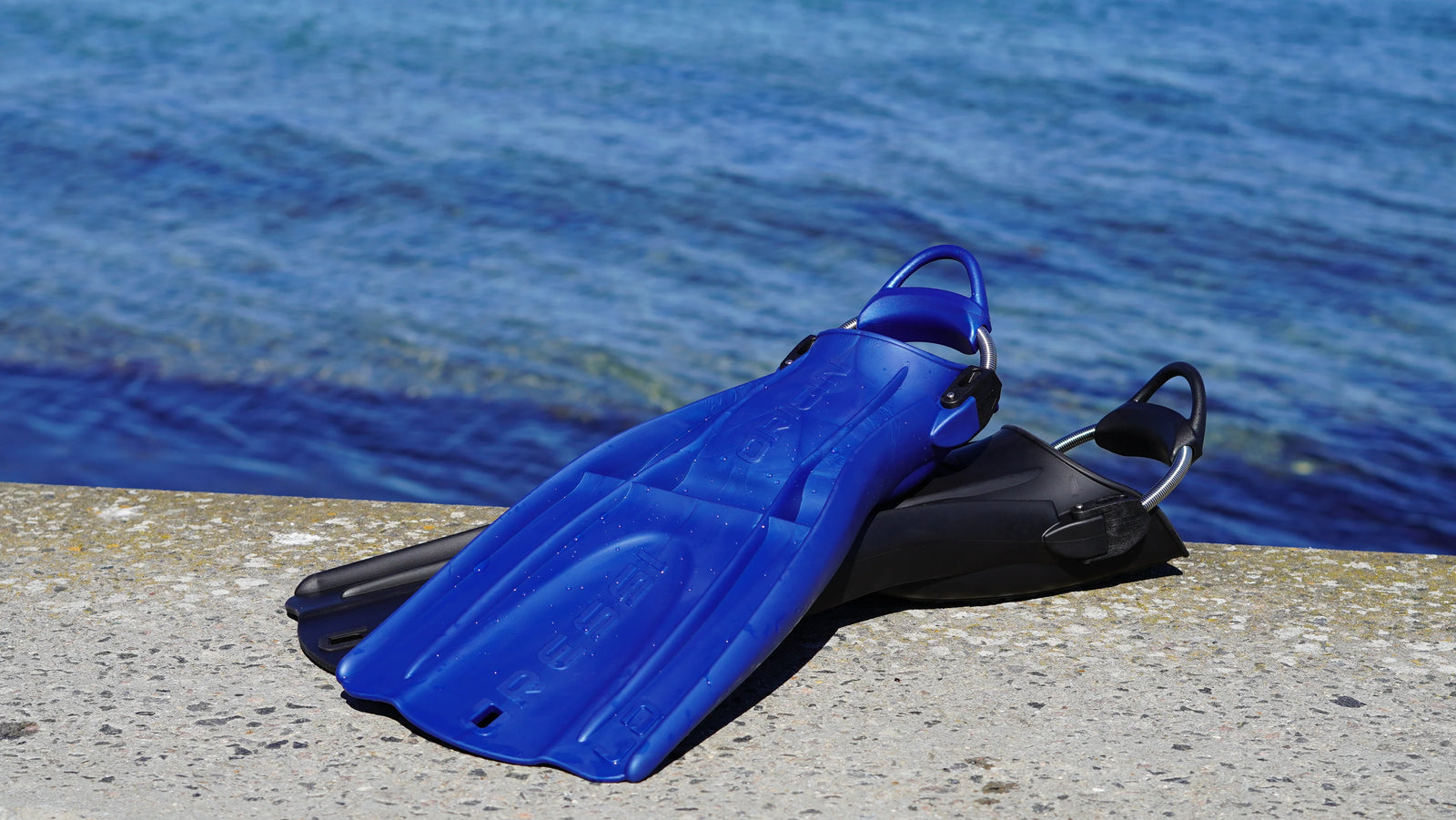
Its short, wide, vented blade is immediately recognisable to divers who value stability, control and efficient power transfer. Today, those characteristics are commonly associated with technical diving, but Cressi’s history with this type of fin development reaches back much further than the modern technical diving category.
The Origin draws on our own history of fin engineering, original designs and patented innovation, bringing those principles forward using modern materials and manufacturing.
Available in Origin LD and Origin HD, the range also gives divers a choice of density, stiffness and underwater buoyancy to better suit their exposure protection, equipment configuration and trim.
80 Years of Family-Led Innovation
Cressi was founded in Genoa in 1946 by brothers Egidio and Nanni Cressi, building on their earlier work developing equipment for the underwater world.
In 2026, we are celebrating our 80th anniversary, and Cressi remains entirely owned by the Cressi family. Our commitment to research, development and in-house product design continues to be central to how we work today.
That continuity is important.
We are proud of our history, but heritage only matters if you continue to develop it. Across eight decades, our focus has remained on improving equipment through engineering, materials, testing and a practical understanding of how it performs in the water.
The Origin is part of that story.
Our Authority in Fin Design Was Built Decades Ago
In 1950, long before technical diving existed as the discipline we recognise today, Cressi introduced the Rondine Commando USA, originally developed for the U.S. Military Underwater Demolition Team. Cressi records that these fins went on to see widespread use through the 1960s, 70s and 80s.
But the significance of this period goes beyond the products themselves.
Cressi was actively engineering and patenting new approaches to fin design.
In 1953, Giovanni Cressi and Luigi Ferraro filed United States Patent US 2,737,668, Fins for Swimmers. The patent addressed fundamental issues in fin geometry, including the angle between the diver’s leg and the blade and the position at which force acts on the foot. The objective was to improve efficiency while reducing unnecessary leverage and resistance. It was granted in 1956.
The original patent drawings even compare the Cressi design with the conventional fin geometry of the period, showing the different relationship between the foot, ankle and blade.
Development continued.
By 1959, further patent work involving Antonio Cressi and Luigi Ferraro was examining openings and movable flaps within the blade to manage water pressure during different phases of the kick. The resulting US patent describes allowing water to discharge through particular areas of the blade to reduce resistance while contributing to forward thrust.
These were not cosmetic changes.
They addressed questions that are still fundamental to fin design today: how force transfers from the diver into the blade, how blade angle affects efficiency, where unwanted resistance occurs and how water moves through and around the fin.
That documented engineering history gives important context to the Origin.
The compact proportions and vented construction seen on the Origin did not appear simply because this style of fin became popular within modern technical diving. They sit within a much longer Cressi history of developing and patenting solutions around fin geometry, water flow and efficiency.
The Origin carries that history forward.
Taking an Established Cressi Design Philosophy Forward
The modern Origin is not intended to reproduce a 1950s fin unchanged.
We have taken principles from our own design heritage and applied them to the requirements of contemporary diving using current materials, construction and manufacturing.
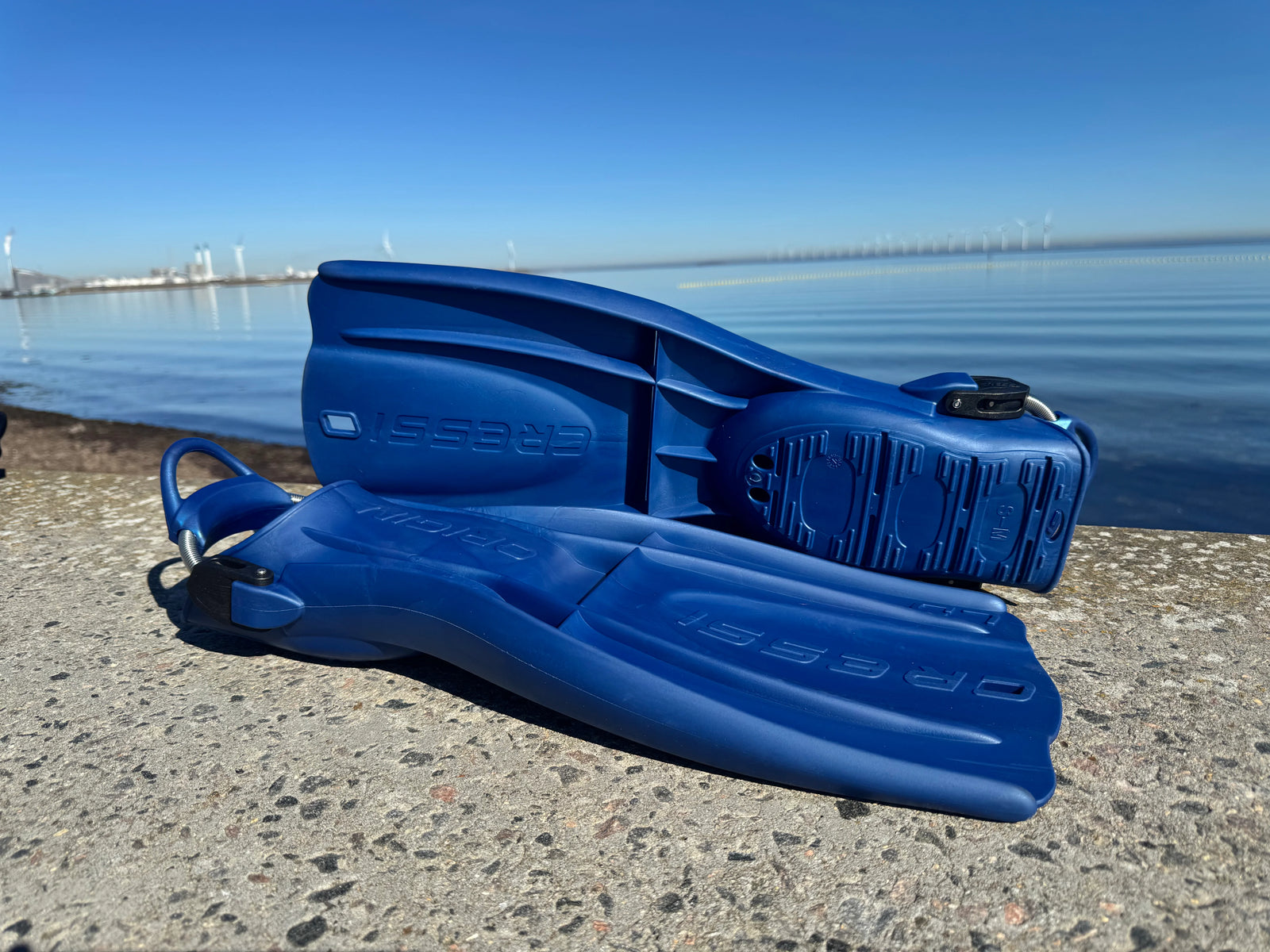
Both Origin versions use a short, wide blade with vents positioned around the area where blade flex begins. These vents help manage forces acting through the blade and allow the use of two rigid side ribs.
The result is a fin developed around stability, controlled power and manoeuvrability across different finning techniques.
For technical divers, those characteristics are particularly relevant when maintaining position, controlling movement around a wreck or managing more complex equipment configurations.
For recreational divers, the same characteristics provide a stable and predictable fin for general diving.
The Origin does not need to imitate what came later. It develops a Cressi design philosophy that was already being explored decades earlier.
Cressi Origin Key features
Select a dot to explore a key feature.

Angled Spring Strap
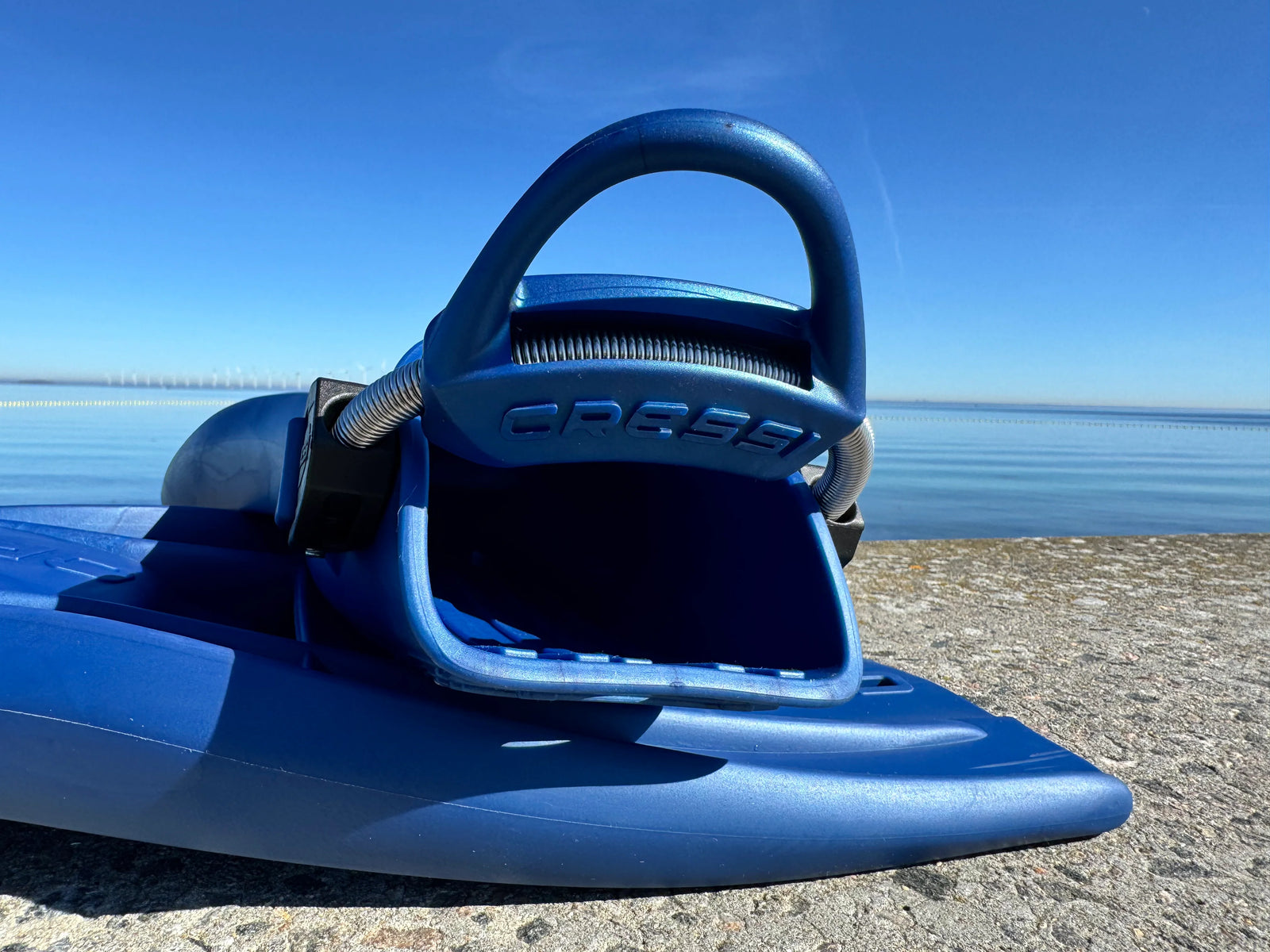
The angled buckle holds the spring straps in the optimum position on the heel piece and simple pin design makes it easy to replace straps if necessary.
Generously Sized Fin Secure
Developed for ease of use with cold hands or gloves.
Ergonomic Foot Pocket
The foot pocket is slightly angled to follow the natural position of your foot, which helps reduce strain during longer dives. The foot pocket is wide enough to accommodate thick boots and a secure fit without feeling cramped.
Single-Piece Rubber Contruction
Single-piece rubber construction makes the Origins ultra-compact and robust from general recreational diving to the toughest environments.
High-density (HD) or Low-Density (LD) Construction
Available in two buoyancy options depending on your needs:
HD: negatively buoyant, for use with a drysuit and medium-heavy equipment.
LD: neutrally buoyant, perfect for wetsuits and medium-light equipment.
Ease of Movement
Ideal for webbing, frog kicks, helicopter turns, and overall manoeuvrability.
The vented blades are short and wide, providing a very strong forward thrust with minimal effort
Cressi Foot Pocket Under the Blade Construction
One of the defining elements of the Origin is our foot pocket under the blade construction.
On the Origin, the blade begins directly above the upper section of the foot pocket at a 15° angle. Cressi’s design positions the blade so the effort generated through the fin stroke transfers directly into the blade rather than being lost through softer areas of the foot pocket.
This is where the connection between our history and our current engineering becomes particularly relevant.
More than 70 years ago, Cressi patent work was already examining the relationship between the foot, ankle and blade and how that geometry could improve fin efficiency.
The modern Origin is not the same construction as those early fins, and we should not pretend that it is. What continues is the engineering approach: look closely at how the diver’s movement is transferred through the fin, identify where efficiency can be improved and design accordingly.
That is a far more important connection than simply reproducing a historical shape.
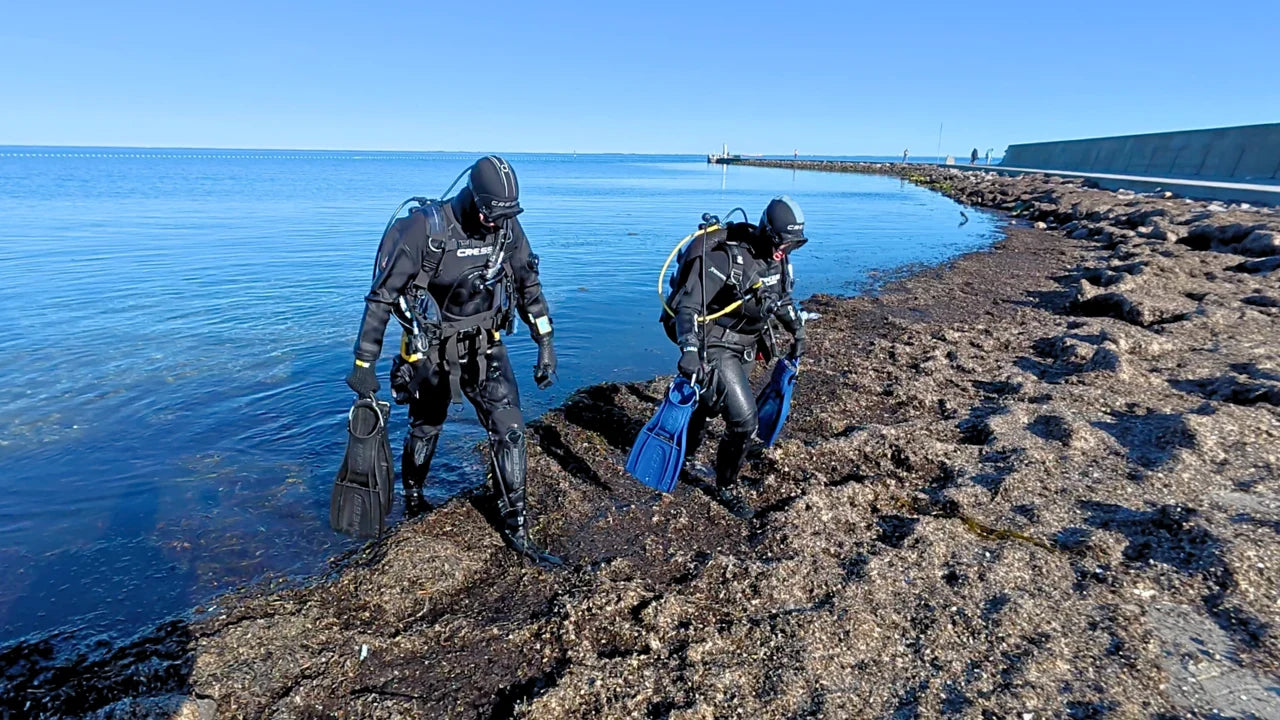
For those who enjoy wreck diving, colder water, or simply want more control, the Origin fins occupy a very comfortable middle ground. The availability of LD and HD versions means you can choose a fin that complements your exposure suit and weighting, rather than forcing a one-size fits-all solution.
The Cressi Origin fins successfully bridge the gap between recreational comfort and technical performance. If you’ve ever looked at heavy tech fins and thought they felt like overkill, the Origin offers a compelling alternative.
They’re not the lightest fins you can travel with, nor are they the stiffest fins you can buy, and that’s precisely the point. For divers who want reliable control, solid construction, and thoughtful buoyancy options, the Origin fins are the fins for you.

SHOP THE ORIGIN RANGE
Origin LD Fins
$249.95